

In today’s fast-moving business environment, HR documentation is not just paperwork—it is the backbone of compliance, employee trust, and organizational security. A strong HR documentation system helps companies avoid legal risks, improve operational efficiency, and protect sensitive employee data.
This guide provides a step-by-step blueprint to build, manage, and secure HR records effectively.

What Is HR Documentation?
HR documentation refers to all records, policies, procedures, and employee-related documents maintained by the Human Resources department. These documents ensure legal compliance, transparency, and smooth workforce management.
Step 1: Build a Strong HR Documentation Foundation
Creating structured and standardized HR documents is the first step.
Key HR Documents Every Company Must Have
| HR Document Type | Purpose |
|---|---|
| Employment Contracts | Define roles, salary & terms |
| Company Policies | Rules, ethics & behavior |
| Employee Records | Personal & professional details |
| Attendance & Leave Records | Time & leave tracking |
| Payroll & Compensation | Salary & benefits data |
| Performance Reviews | Appraisal & growth tracking |
| Exit & Termination Records | Legal protection |
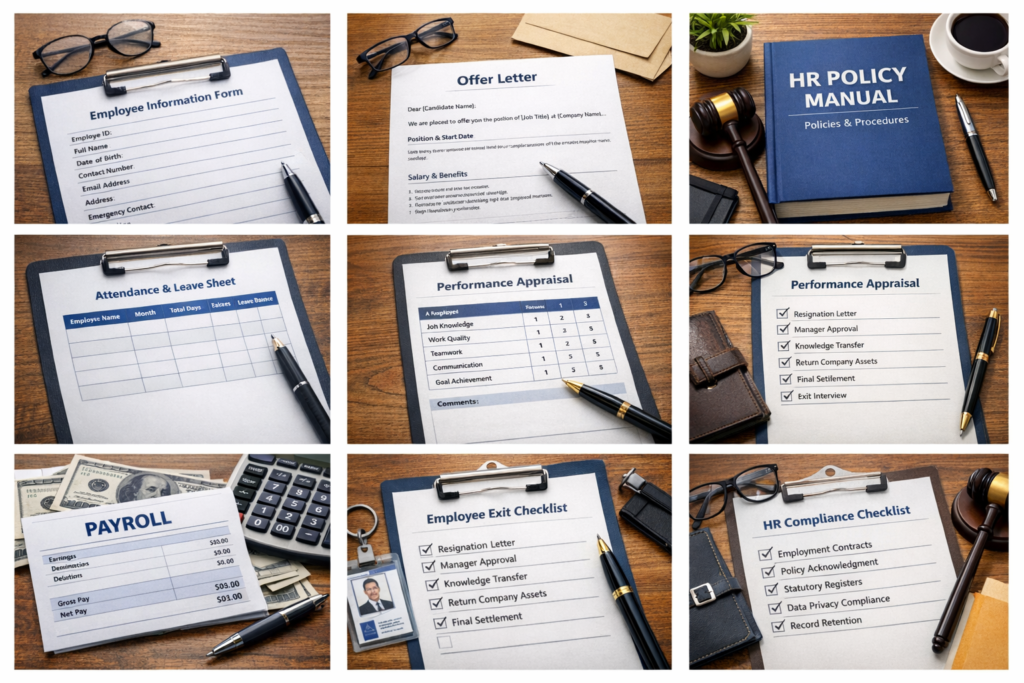
Tip: Always use standardized formats to maintain consistency.
Step 2: Manage HR Records Efficiently
Good documentation is useless if it’s hard to manage. Efficient management ensures quick access and accuracy.
Best Practices for HR Documentation Management
- Use digital documentation systems
- Maintain clear naming conventions
- Keep version control for policies
- Update records regularly
- Assign access roles (HR, Manager, Admin)
Manual vs Digital HR Documentation
| Feature | Manual | Digital |
|---|---|---|
| Accessibility | Low | High |
| Security | Weak | Strong |
| Compliance | Risky | Safer |
| Storage Cost | High | Optimized |
| Scalability | Limited | Unlimited |
Step 3: Secure HR Records & Employee Data
HR documents contain confidential and sensitive data, making security critical.
Essential HR Data Security Measures
- Role-based access control (RBAC)
- Password-protected systems
- Data encryption
- Regular backups
- Audit logs & activity tracking
- Compliance with labor & data laws
Failure to secure HR documents can lead to legal penalties and loss of employee trust.
Step 4: Compliance & Legal Readiness
HR documentation must align with labor laws, company policies, and government regulations.
Compliance Checklist
- Maintain statutory registers
- Follow record retention policies
- Keep signed acknowledgments
- Update policies as laws change
- Conduct internal audits
Step 5: HR Documentation Best Practices
✔ Clear & simple language
✔ Centralized document storage
✔ Regular training for HR staff
✔ Backup & disaster recovery plan
✔ Use automation & HR tools
Benefits of a Powerful HR Documentation System
- Reduced legal risk
- Improved HR efficiency
- Strong data security
- Faster decision-making
- Better employee transparency
- Professional & scalable HR operations

Frequently Asked Questions (FAQ)
Q1. Why is HR documentation important?
HR documentation ensures legal compliance, protects company interests, and maintains employee transparency.
Q2. How long should HR documents be stored?
Retention depends on labor laws, but most records should be kept for 3–7 years.
Q3. Is digital HR documentation safe?
Yes, if proper security measures like encryption, access control, and backups are used.
Q4. Who should access HR records?
Only authorized personnel such as HR managers and senior leadership.
Conclusion
A powerful HR documentation blueprint is essential for building a compliant, secure, and future-ready organization. By building structured documents, managing them efficiently, and securing sensitive data, companies can strengthen HR operations and protect both employees and business interests.
This content is for informational purposes only and does not constitute legal or HR advice. Organizations should consult HR or legal professionals to ensure compliance with applicable laws and regulations.
#HRDocumentation #HRCompliance #HRManagement #EmployeeRecords #Carrerbook #Anslation #HRPolicies #DataSecurity #HRBestPractices #WorkplaceCompliance #HRBlueprint