

I have a small habit when I shop online. If I see something I like, I try not to buy it immediately.
Sometimes I fail at this.
It is very easy to open a shopping app with one thing in mind and end up looking at five completely different products. You check the price, look at a few photos, read some reviews, notice a discount, and suddenly you are thinking, “Maybe I should get this one too.”
The funny part is that the product was not even on your list when you opened the app.
I have had both kinds of shopping experiences. There are products I bought online that I still use all the time. Then there are those purchases where the parcel arrived and I wondered why the item looked so much better on my screen.
Maybe the size was wrong. Maybe the material was disappointing. Sometimes I simply realised that I already had something at home that did almost the same job.
That is why I think buying online needs a little pause.
You do not have to become an expert before ordering a pair of shoes or a kitchen container. But when you are spending a decent amount of money, a few extra checks can make the decision much easier.
There are countless choices in 2026. Phones, laptops, headphones, clothes, beauty products, furniture, kitchen appliances and everyday household items are all competing for our attention.
So before you click Buy Now, here are the things I would personally check.
Ask Yourself One Slightly Uncomfortable Question
Do I actually need this?
It is not the most exciting question, but it is probably the most useful one.
A product can look attractive without being useful to you.
Maybe you have seen a particular water bottle in several Instagram videos. Maybe a new gadget is suddenly everywhere. Maybe a shopping website is showing a huge discount and making the product look like an opportunity you should not miss.
But if you stop for a moment, you may realise that you already own something similar.
I try to think about how the product would fit into my normal day.
If I am looking at a kitchen appliance, would I really use it or would it end up in a cupboard?
If I am looking at another handbag, do I have a reason for buying another one?
If I want a gadget, what problem is it actually going to solve?
Sometimes this little thought process ends with me buying the product.
Sometimes it ends with me closing the app.
Both are perfectly fine outcomes.
Decide Your Budget Before the Product Decides It for You

I have noticed that my budget becomes strangely flexible once I find something I really like.
Suppose I start looking for wireless earbuds with around ₹2,000 in mind.
I find a pair for ₹1,700. Great.
Then I see one for ₹2,300. It has better battery life, so I start considering it.
Then I find another model for ₹3,000.
It has even more features.
At this point, I am no longer shopping within my original budget. I am simply trying to justify spending more.
This can happen with almost anything.
That is why I prefer deciding on a comfortable range before I start browsing seriously. If I later decide to spend more, at least I know why.
Also, do not forget the small costs.
Delivery charges, installation fees, accessories and other add-ons can make a product more expensive than it first appeared.
The price you see at the beginning is not always the amount you finally pay.
Don’t Confuse a Low Price With Good Value

I enjoy finding something at a lower price. Most people do.
But I have also learned that cheap and good value are not always the same thing.
Imagine two products doing basically the same job. One costs ₹800 and another costs ₹1,300. If both perform equally well and have similar quality, there is no reason to spend the extra ₹500.
But what if the ₹800 product starts showing problems after a few months while the ₹1,300 version continues working properly?
Suddenly, the cheaper option does not look quite as attractive.
The opposite is also true.
Sometimes the inexpensive product is perfectly good and the expensive one simply has features you will never use.
So instead of asking only, “Which one is cheaper?” I think it is better to ask:
“Which one gives me enough for what I am paying?”
That makes the decision much more realistic.
Read Reviews Like a Person, Not Like a Score

A five-star rating looks nice.
So does a product with ten thousand ratings.
But I would still scroll down and read a few comments.
The written reviews often tell you things the rating cannot.
Someone might say the shoes look good but run slightly small. Another buyer might mention that a storage box is sturdy but smaller than expected. Someone else may explain how the product performed after using it for several months.
Those little comments are valuable because they come from people who actually received the product.
I also pay attention to repeated complaints.
One person having a bad experience does not automatically mean the product is terrible. People have different expectations and sometimes products get damaged during delivery.
But if many recent buyers are complaining about the same issue, I would not ignore it.
And when possible, look at recent reviews rather than relying entirely on feedback from years ago.
A product can change. Packaging can change. Even the quality of a particular version can change.
Product Photos Are Not Enough

This is something I learned after being impressed by products that looked much better in photographs.
Online sellers obviously want their products to look attractive.
That is normal.
But the photograph cannot tell you everything.
If I am buying electronics, I want to know things like storage, battery capacity, charging options, compatibility and connectivity.
If I am buying clothes, I check measurements instead of trusting the size label alone.
For skincare, I would look at the ingredients, quantity and directions.
For furniture, dimensions and material are important.
These details are not as exciting as scrolling through product photos, but they are often what decide whether the purchase works out.
A beautiful photograph can create interest.
The specifications help you make the actual decision.
Measure Before You Buy Something Big
Furniture is one category where I would never rely only on the picture.
A table might look small because the room in the photograph is spacious. A wardrobe might look manageable until you realise how much floor space it takes.
Before ordering anything large, measure the place where you want to keep it.
And measure more than the exact floor area.
Think about the doorway.
Think about whether you can open nearby doors.
Think about whether people can still walk around the furniture comfortably.
A sofa that technically fits into a room can still make the entire room feel cramped.
Taking measurements may feel like a boring extra step while shopping, but it is much less boring than trying to return a huge item later.
Stop Comparing Once You Have Enough Good Choices
Sometimes online shopping becomes unnecessarily complicated because we keep searching.
I have done this myself.
You find three good products. Instead of choosing one, you think there must be something even better.
So you keep looking.
Then you find another five.
After an hour, the differences between all of them are so small that making a decision becomes harder than it was at the beginning.
I think three or four strong options are usually enough.
Once you have them, compare the features that actually matter to you.
If you are buying headphones, comfort and battery life might be important.
For a washing machine, capacity and energy use may matter more.
For a jacket, fit, fabric and warmth could be your main concerns.
There is no prize for reading every specification on every product page.
The Seller Deserves Some Attention Too

When we shop online, we naturally focus on the product.
But who is selling it matters as well.
Before ordering, look at the seller information available on the platform. Check the seller’s ratings and customer feedback where applicable.
If the price is dramatically lower than other listings, take another look.
Maybe you have found a genuine offer.
Maybe there is a different model.
Maybe the warranty is different.
Maybe there is another reason for the price difference.
I am not saying that cheap listings should automatically be avoided. I just think an unusually low price deserves an extra minute of attention.
Check the exact model, seller details and warranty before assuming you have found the deal of the year.
Find Out What Happens If You Change Your Mind

Nobody likes thinking about returns while placing an order.
You are excited about getting the product, not planning how to send it back.
Still, it is worth checking the return policy before paying.
Some products have easy return options. Others may only allow replacement. Some categories have special conditions, and some items may not be returnable at all.
You do not have to read every word.
Just find the important information.
How many days do you have?
Does the product need to be unused?
Does the original packaging matter?
What happens if the item arrives damaged?
Knowing these things beforehand can save you a lot of frustration.
Expensive Products Need a Warranty Check
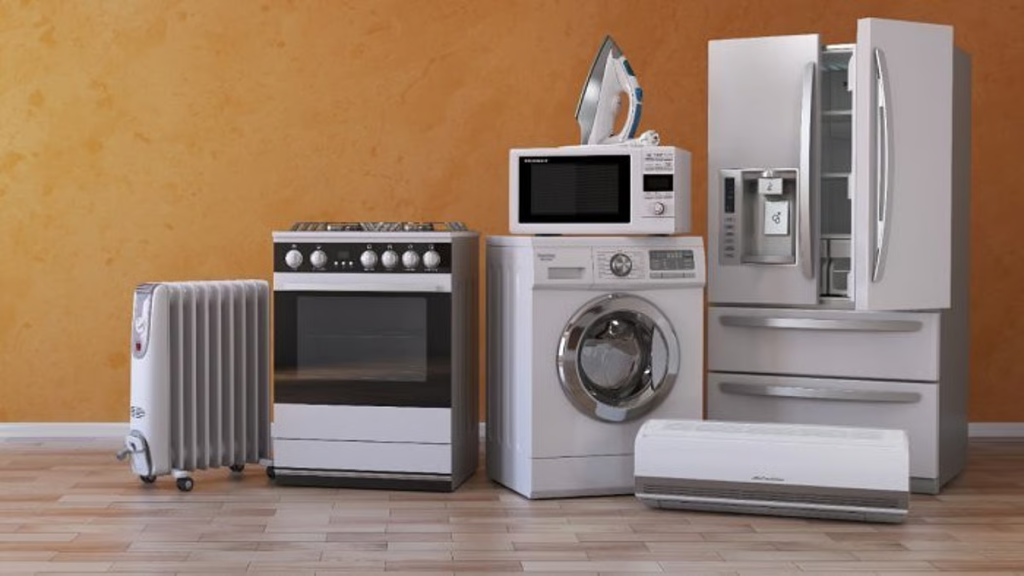
Warranty is something I take more seriously when the purchase costs a lot.
If I am buying a small household item, I may not spend much time thinking about it.
If I am spending ₹30,000 on a laptop or a significant amount on an appliance, I definitely want to know what support comes with it.
Do not stop when you see “1-year warranty.”
Look at what that actually means.
Does it cover manufacturing defects?
How are repairs handled?
Where would you have to take the product if something goes wrong?
What kind of service does the brand provide?
If two products are otherwise similar, a better warranty or service network can make one of them much more attractive.
Don’t Get Excited by the Discount Percentage Alone

A huge discount is one of the easiest ways to get our attention.
“70% OFF” looks much more exciting than “₹500 saved.”
But I try to focus on the final price.
That is the number that actually matters.
Compare the same model with other listings. Check coupons. Look at bank offers if you plan to use one. If cashback is mentioned, check whether there are conditions attached.
Sometimes a product marked 30% off is cheaper than another product marked 60% off.
The discount is only useful if the final price is good.
Make Sure You Actually Need It by a Certain Date

Delivery dates are easy to ignore when you are buying something casually.
If a phone cover arrives two days later than expected, it probably does not matter much.
If you ordered a birthday gift, college item or travel accessory, it can be a different story.
Before paying, look at the estimated delivery date.
If you need the product for a particular occasion, give yourself some extra time rather than ordering at the last possible moment.
A good discount does not feel like a good deal when the parcel arrives after the event.
Try the Six-Month Test

Here is a simple trick I use when I am tempted by something that looks exciting.
I imagine that I bought it six months ago.
The packaging is gone. The excitement is gone. The product is simply sitting in my home as part of my everyday life.
Would I still be using it?
Would I still think the purchase was worth it?
Would I care about all those extra features?
Would I be annoyed by charging it, cleaning it or maintaining it?
This is particularly useful with gadgets and trendy products.
Sometimes we are attracted to the idea of owning something more than actually using it.
The product may look impressive online, but if you know you will use only one feature, a simpler model could be the better choice.
Social Media Can Make Products Feel More Necessary Than They Are

I actually like discovering products through social media.
Instagram reels, YouTube videos and other short reviews can introduce you to things you might never have found yourself.
The problem starts when seeing something repeatedly makes it feel like a necessity.
After watching the same product in five different videos, it can almost feel strange not to own it.
When that happens, I like asking myself one question:
“Would I still want this if I had never seen it on social media?”
If the answer is yes, then fine. Continue researching it.
If the answer is no, I usually wait.
A few days can make a surprising difference.
Sometimes the excitement disappears and you realise you were interested because everyone else seemed interested.
Check the Box Contents Before Assuming Anything

Product photographs can sometimes create confusion about what you are actually buying.
A camera might be photographed with several accessories. A gadget may be shown with a case or stand. A kitchen appliance may be surrounded by extra tools.
Do not assume everything in the photograph comes with the main product.
Find the package contents section.
See exactly what is included.
If you need to buy a separate charger, cable, case, stand or another accessory, add that amount to the product price.
It is much better to know the complete cost before ordering than after opening the parcel.
Give the Cart One Last Look

This takes less than a minute, so there is really no reason to skip it.
Before payment, look at the order again.
Is the size correct?
Is the colour right?
Did you choose the correct model?
Is the storage capacity what you wanted?
Is the quantity correct?
Has the final price changed?
When will it arrive?
Are there any extra charges?
Small ordering mistakes happen more often than we like to admit.
Sometimes the wrong size is selected because two variants were next to each other. Sometimes an offer automatically adds another quantity. Sometimes the colour changes while browsing.
Catching the mistake before payment is much easier than dealing with it after delivery.
Don’t Judge the Purchase on the Day It Arrives

There is something satisfying about opening a parcel.
The box finally arrives, you open it, and for a moment the purchase feels completely worth it.
But I think the better test comes later.
A few weeks pass.
Are you still using it?
Has it made something easier?
Does the quality still feel good?
Do you wish you had bought another model?
Those are the questions that tell you whether you made a good decision.
A product does not need to be the most expensive option to be useful. It does not need to have the largest number of features either.
It simply needs to work well for the person who bought it.
And that person is you.
Conclusion
Online shopping has made everyday purchases much more convenient. We can check prices, compare products, read customer experiences and place an order without spending hours travelling from one shop to another.
But having everything available so quickly can also encourage us to buy too quickly.
A product may look perfect in a photograph. A discount may look impossible to ignore. A creator may make a particular gadget seem like something everyone needs.
That is why I think a short pause before buying is worth it.
Ask yourself what you need the product for. Decide how much you are comfortable spending. Compare a few realistic options instead of dozens. Read the reviews properly. Check the specifications. Look at the seller, warranty and return rules when they matter.
And do not forget the practical things — measurements, delivery dates, package contents and the final amount you will actually pay.
You do not need to become a professional shopper.
You just need to give yourself enough time to make a decision without feeling rushed.
Sometimes that means finding a genuinely good product.
And sometimes it means closing the shopping app and deciding to buy nothing.
Both can be smart decisions.
Because the best shopping experience is not necessarily the moment when you find a massive discount or receive a parcel the next morning.
It is looking at something you bought weeks later and still feeling that quiet little satisfaction:
“Yes. This was worth it.”