

Have you ever checked your bank balance and wondered how the money disappeared so quickly?
I have had that moment more than once. At the start of the month, I feel quite relaxed. Bills are paid, there is money in the account, and I already have a rough idea of what I want to spend. Then everyday life starts happening.
One day I order lunch because I am busy. Another day I take a cab because I am getting late. Then there is a small online purchase, a coffee with a friend, and maybe something I did not really plan to buy but happened to find on sale.
None of those expenses feels serious while it is happening.
The problem is what they look like when you add them together.
That is why I think personal finance is less about being extremely strict with money and more about paying attention. You do not have to stop enjoying your life. You just need to know where your money is going and make sure it is going toward things that actually matter to you.
Here are some simple ways to get started in 2026.
Look at Your Spending Honestly
Before creating a budget, look at the way you already spend.
Not the way you think you spend. Your actual spending.
For one month, keep track of your expenses. It can be as simple as opening the notes app on your phone and typing the amount whenever you buy something.
₹120 for coffee.
₹350 for lunch.
₹600 for an online order.
₹80 for an auto.
It may feel unnecessary to record such small amounts, but that is exactly why it can be useful. Small payments are easy to forget.
At the end of the month, look back at the list.
You might find that your biggest problem is not shopping at all. Perhaps eating outside is taking more money than expected. Maybe transport costs have increased. Or perhaps several subscriptions are quietly taking money every month.
You do not need to judge yourself while doing this.
Just notice the pattern.
Build a Budget Around Your Real Life

I used to think a good budget meant saying no to almost everything.
No unnecessary shopping. No eating out. No random purchases. Save as much as possible.
It sounds responsible, but it is not always realistic.
If a budget is too restrictive, you may follow it for a few weeks and then completely give up.
A better approach is to start with your regular expenses and work from there.
Think about your rent or household contribution, groceries, travel, bills, education expenses, debt payments and other things you cannot simply avoid. Then decide how much you want to put toward savings.
Whatever remains can be divided between personal spending and other goals.
The numbers will look different for everyone.
A student living with family does not have the same expenses as someone renting a flat. Someone with a family may have responsibilities that another person does not.
So do not worry too much about following somebody else’s exact budgeting formula.
Your budget should make sense for your income.
Save Something Before You Start Spending

One mistake many people make is waiting until the end of the month to save.
The problem is that money has a habit of finding somewhere to go.
You tell yourself you will save ₹3,000 this month. Then there is a birthday, a dinner, a sale, a repair, a few food orders and suddenly the month is nearly over.
If you can, move some money into savings soon after receiving your income.
It does not have to be a large amount.
Even ₹500 or ₹1,000 is a beginning if that is what your current situation allows.
Later, you can increase it.
It also helps to give your savings a purpose. Money kept aside for “something someday” can be tempting to spend. Money saved for a specific goal feels different.
Maybe you are saving for a trip.
Maybe you want a new laptop.
Maybe you simply want some money sitting there so that an unexpected expense does not completely disturb your month.
Whatever the reason, give the money a job.
An Emergency Fund Is Boring Until You Need It
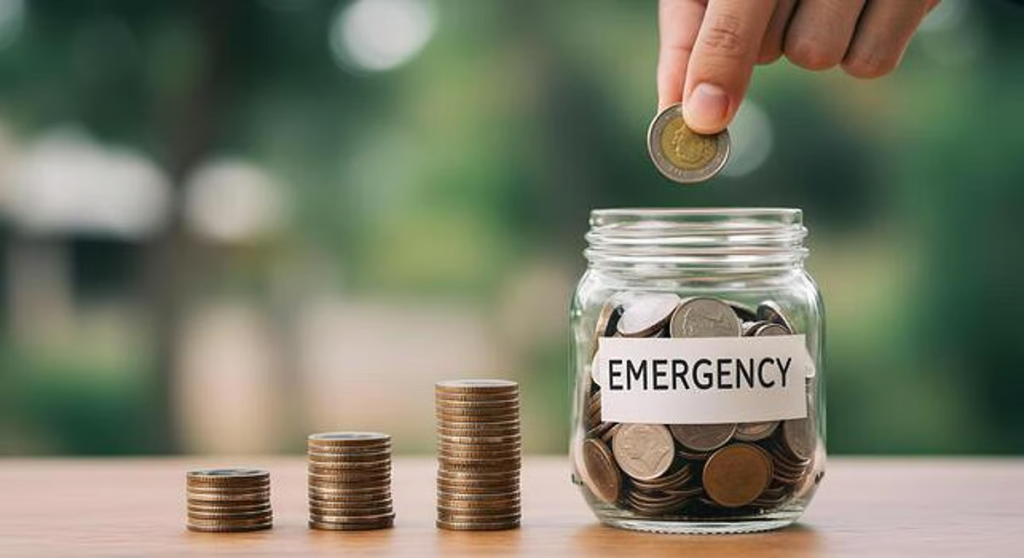
Nobody gets excited about saving money for an emergency.
There is no fun shopping involved. There is no holiday at the end of it. It is just money sitting there.
But the first time something unexpected happens, you understand why it matters.
A phone can break. A vehicle can need repairs. A family expense can suddenly appear. Your income may be delayed or reduced for some reason.
Without savings, you may have to borrow or depend on a credit card.
If you are starting from zero, do not look at the amount you eventually want and feel discouraged.
Start with a small target.
Once you reach it, increase the target.
Over time, you can work toward keeping several months of essential expenses available.
The important part is not building the perfect emergency fund immediately. It is getting used to keeping some money aside for things you cannot predict.
Wait Before Buying Things You Did Not Plan For

Online shopping has made impulse buying almost effortless.
You can be sitting at home, watching a video, see someone recommend a product, click a link and be at the payment page a few minutes later.
I have definitely had moments where something looked like a great idea at 10 p.m. and seemed completely unnecessary the next morning.
That is why waiting can help.
If the purchase is not urgent, leave it in your cart for a day.
Come back later and ask yourself a few simple questions.
Do I need it, or did I just see it at the right moment?
Do I already own something similar?
How often will I really use it?
Would I buy it without the sale?
Sometimes you will still decide to buy it.
That is perfectly fine.
The point is not to make yourself feel guilty about spending money. It is to give yourself enough time to decide instead of making every purchase in the excitement of the moment.
Go Through Your Subscriptions
Subscriptions are easy to start and surprisingly easy to forget.
You may have taken a free trial for an app. You might have subscribed to a streaming service for one particular show. Perhaps you signed up for a premium feature and stopped using it after a few weeks.
The charge can continue quietly in the background.
Every few months, check your bank account or card statement.
Look for recurring payments.
If you find something you have not used in a long time, ask yourself whether you still need it.
You do not have to cancel every subscription. Keep the ones you genuinely use.
But if you are paying for something simply because you forgot about it, that money could probably be used somewhere better.
Don’t Let a Sale Talk You Into Spending
I like discounts. Most people do.
Seeing a product at ₹1,499 instead of ₹2,499 definitely gets your attention.
But sometimes the original price and the discount percentage become more exciting than the actual product.
Before buying, forget the “50% off” label for a moment.
Ask yourself how much money will actually leave your account.
If you spend ₹1,499 on something you never needed, you have not saved ₹1,000. You have spent ₹1,499.
That small difference in thinking can change the way you shop.
When comparing products, look at the complete cost too. Delivery charges, return conditions, warranty and product quality can matter just as much as the discount.
A cheaper product is not necessarily a better purchase.
Your Instagram Feed Is Not Your Financial Reality

Money decisions are not only influenced by prices.
Sometimes they are influenced by what we see other people doing.
You see someone travelling to another city every few weeks. Someone buys expensive clothes. Another person upgrades their phone as soon as a new model arrives.
After watching this regularly, spending more can start to feel normal.
But social media rarely shows the full financial picture.
You do not know what someone earns, what they save, what they owe or what their family responsibilities are.
You also do not know what they decided not to buy.
So if your financial goal right now is different, that is completely okay.
Maybe you would rather have ₹50,000 in savings than a new phone.
Maybe you are saving for your education.
Maybe you are trying to clear debt.
There is no need for your money choices to look impressive to anyone else.
Learn Before You Invest

Investing can help you work toward long-term financial goals, but rushing into it is not necessary.
There is a lot of investment advice online, and not all of it is suitable for everyone.
You might hear someone say that a particular stock is going to rise. Another person may recommend a fund. Someone else may talk about an investment that supposedly gives amazing returns.
Before following any of them, learn what you are actually putting your money into.
Start with the basics.
Understand risk and return. Learn about diversification. Understand inflation and compounding. Know why some investments can lose value and why higher potential returns usually come with greater uncertainty.
You can gradually learn about things such as:
- Stocks
- Mutual funds
- Bonds
- Interest
- Inflation
- Compounding
- Diversification
- Risk and return
You do not need to become an expert before taking your first financial step.
But you should understand enough to know what you are doing.
And be particularly careful whenever someone describes an investment as guaranteed or risk-free while promising unusually high returns.
Don’t Ignore Debt

Debt is easier to manage when you know exactly where you stand.
If you have a loan or credit card balance, write down the important details.
How much do you owe?
What is the interest rate?
When is the payment due?
How much are you paying each month?
You may not enjoy looking at those numbers, but avoiding them does not make the debt smaller.
Knowing the details gives you something to work with.
Credit cards are another area where it helps to be realistic. A credit limit tells you how much you may be able to borrow, not how much you can comfortably afford to spend.
If you use credit, keep repayment in mind before making the purchase.
Give Your Savings a Number

“I want to save more” sounds good, but it is difficult to measure.
A specific goal is easier.
For example:
I want to build a ₹20,000 emergency fund.
I want to save ₹15,000 for a trip.
I want to put ₹2,000 aside every month.
Now you have something you can actually track.
Suppose your target is ₹24,000 and you want to reach it in a year. You can work backward and see what monthly amount might be realistic.
If one month does not go according to plan, adjust the target instead of giving up.
A financial goal is not ruined because one month was difficult.
You simply continue from where you are.
Keep Some Money for Enjoyment

There is no point creating a budget that makes you miserable.
You are allowed to spend money on things you enjoy.
Maybe you like going out for food with friends. Perhaps you enjoy buying clothes, books, skincare or small gadgets. Maybe weekends are when you like to relax and spend a little.
Include these things in your budget.
If you know you have ₹2,000 available for personal spending, you can enjoy it without wondering whether you have messed up your entire financial plan.
Being careful with money does not mean never spending.
It means knowing what you can afford.
Do a Small Money Check at the End of the Month

You do not need to spend your entire Sunday analysing your finances.
Give yourself a few minutes instead.
Look at your bank statement and ask what happened during the month.
Was there an expense you completely forgot about?
Did you spend more on food than expected?
Did you save what you planned to save?
Did you buy something that you probably could have skipped?
Are there any subscriptions you no longer use?
You can even choose one small thing to change next month.
Maybe you will order food one less time each week. Perhaps you will wait 24 hours before buying non-essential items. Or you may simply decide to save ₹500 more.
Small changes are easier to live with.
And when they become normal, you can make another one.
Final Thoughts
Personal finance is not about becoming perfect with money.
Some months will be easy. Some will not.
There will be birthdays, unexpected bills, travel plans, repairs and those occasional purchases that were definitely not in the original budget.
That is normal.
What matters is having a general idea of where you stand and being willing to make adjustments when things change.
Start by looking at your spending. Create a budget that actually fits your life. Put some money aside when you can. Think twice about impulse purchases. Keep an emergency fund in mind. Learn before investing and stay aware of any debt you have.
You do not need to do all of this tomorrow.
Pick one thing.
Maybe today you check your subscriptions. Next week you start tracking expenses. At the end of the month, you see what changed.
That is how better money habits usually happen—not through one dramatic decision, but through ordinary choices repeated over time.
And eventually, opening your banking app may feel a little less stressful because you actually know where your money went.